
What Are Dental Veneers? Benefits, Cost, Procedure & What to Expect
If you are looking to improve the appearance of your smile, you may have heard about dental veneers. At The Smile Mission, we understand that every smile is different, which is why cosmetic dental treatments should be planned around your individual needs and goals.
But what are veneers, how do they work, and are they suitable for everyone?
In this guide, we explain what dental veneers are, their benefits, how the treatment works, what they may cost, and what you can expect before and after treatment.
What Are Veneers?
Veneers are thin, custom-made coverings designed to fit over the front surface of a tooth. They are typically made from materials such as porcelain or composite resin and are carefully designed to complement your natural teeth.
Veneers can be used to improve the appearance of teeth affected by concerns such as:
- Discolouration or staining
- Minor chips or wear
- Uneven tooth shape
- Small gaps between teeth
- Teeth that appear slightly irregular
- Certain cosmetic imperfections
The aim is not simply to make teeth look “perfect”, but to create a smile that looks natural and suits your facial features.
What Are Porcelain Veneers?
Porcelain veneers are thin ceramic restorations that are individually made to fit the front of the tooth.
They are popular because porcelain can provide a natural-looking appearance and can be designed to mimic some of the light-reflecting properties of natural enamel.
Your dentist will assess your teeth and discuss whether porcelain veneers are appropriate for your particular needs.
What Are Composite Veneers?
Composite veneers use a tooth-coloured composite resin that is applied and shaped directly on the tooth.
Compared with porcelain veneers, composite veneers may involve a different treatment process and can sometimes be completed with fewer appointments. However, the appropriate option depends on your teeth, desired outcome, and the dentist’s assessment.
Your dentist can explain the differences between porcelain and composite veneers during your consultation.
What Are the Benefits of Dental Veneers?
Veneers can offer several cosmetic benefits when they are appropriately planned and fitted.
1. Improve Tooth Appearance
Veneers can help address certain concerns with tooth colour, shape, size, or minor imperfections.
2. Create a More Balanced Smile
Custom-designed veneers can be shaped and proportioned to complement your existing teeth and overall smile.
3. Natural-Looking Results
Modern dental materials can be carefully matched and shaped to create a natural-looking result rather than an overly artificial appearance.
4. Address Multiple Cosmetic Concerns
Depending on your individual situation, veneers may help address more than one cosmetic concern at the same time, such as discolouration and uneven tooth shape.
5. Customised Treatment
Every smile is different. Veneers can be individually planned according to your tooth shape, facial proportions, smile line, and personal preferences.
How Does the Veneer Procedure Work?
The exact process can vary depending on the type of veneers you choose and your individual treatment plan.
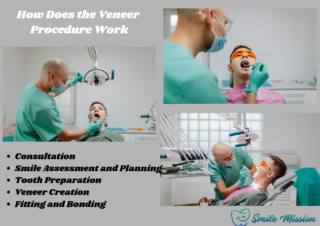
Step 1: Consultation
Your dentist will examine your teeth and gums and discuss what you would like to change about your smile.
This is an important stage because veneers are not suitable for every dental situation.
Step 2: Smile Assessment and Planning
Your dentist will consider factors such as tooth shape, colour, bite, gum health, and the appearance you want to achieve.
Photos, digital scans, impressions, or other planning methods may be used depending on the treatment.
Step 3: Tooth Preparation
If veneers are appropriate, your dentist may need to prepare the tooth surface to create space for the veneer.
The amount of preparation depends on the treatment approach, material, and individual tooth.
Step 4: Veneer Creation
For porcelain veneers, your customised veneers are produced to the agreed design.
Temporary restorations may be provided where appropriate while the final veneers are being made.
Step 5: Fitting and Bonding
Once the veneers are ready, your dentist checks their fit, colour, shape, and appearance before bonding them to the teeth.
Your dentist will make sure the final result is comfortable and functions appropriately with your bite.
Are Veneers Suitable for Everyone?
Veneers are not automatically suitable for every patient.
Before treatment, your dentist will assess your overall oral health and the condition of your teeth. Existing dental problems, such as untreated decay or gum disease, may need to be addressed first.
Veneers may also not be suitable for people who regularly place excessive force on their teeth, such as through certain habits or severe teeth grinding.
A professional assessment is therefore essential before deciding whether veneers are right for you.
How Much Do Veneers Cost?
The cost of veneers can vary considerably depending on several factors.
These may include:
- The type of veneer material
- The number of teeth being treated
- The complexity of the case
- The preparation required
- Laboratory costs
- The dentist and dental practice
- Additional dental treatment that may be needed
Because every smile is different, it is difficult to provide one price that applies to everyone.
During your consultation, your dentist can assess your teeth and provide information about the treatment options and associated costs.
How Long Do Veneers Last?
The lifespan of veneers varies from person to person.
Factors such as oral hygiene, diet, bite forces, teeth grinding, lifestyle habits, the material used, and the quality of placement can all affect how long they remain in good condition.
Looking after your veneers in the same way you care for your natural teeth and attending regular dental check-ups can help support their longevity.
How Do You Look After Veneers?
Good oral hygiene remains important after veneer treatment.
You should:
- Brush your teeth regularly with fluoride toothpaste
- Clean between your teeth daily
- Attend regular dental check-ups
- Avoid using your teeth to open packaging
- Be mindful of habits that put excessive pressure on your teeth
- Follow your dentist’s specific aftercare advice
Although veneers can be durable, they still need appropriate care.
Do Veneers Look Natural?
When carefully planned and designed, veneers can provide a natural-looking result.
The colour, shape, size, translucency, and positioning of the veneers all contribute to the final appearance. Your dentist can discuss your preferred smile style while ensuring the result works with your natural facial features and existing teeth.
A good cosmetic dental treatment should complement your smile rather than make it look unnatural.
Veneers vs Crowns: What’s the Difference?
Veneers and crowns are not the same treatment.
Veneers generally cover the front surface of a tooth and are commonly used to address selected cosmetic concerns.
Crowns provide more extensive coverage and are often used when a tooth has significant structural damage or requires greater protection.
The appropriate treatment depends on the condition of the tooth and your individual dental needs. Explore our range of dental services designed to support your oral health and smile goals.
Are Veneers Permanent?
Veneers are considered a long-term cosmetic dental treatment, but they are not necessarily permanent for life.
Depending on the material and treatment approach, replacing veneers may eventually be necessary due to normal wear, damage, or changes in the underlying tooth.
Your dentist can explain the expected longevity and maintenance requirements before treatment.
Why Choose The Smile Mission for Veneers?
Choosing veneers is about more than selecting a cosmetic treatment. It is important to have your teeth properly assessed and your treatment carefully planned around your individual smile.
At The Smile Mission, we focus on understanding your dental goals and creating a treatment plan that considers your oral health, smile, and desired outcome.
If you are considering veneers, a consultation is the best way to find out whether they are suitable for you and what options may be available. Want to see our work? Follow on Instagram and Facebook for real smile transformations, dental tips, treatment updates, and more.
Frequently Asked Questions About Veneers
Are veneers painful?
The experience can vary depending on the type of veneer treatment and the amount of tooth preparation required. Your dentist will discuss what to expect and can help keep you comfortable throughout the procedure.
Can veneers fix crooked teeth?
Veneers can sometimes improve the appearance of mildly uneven or irregular teeth. However, they do not physically straighten teeth in the same way as orthodontic treatment. Your dentist can advise whether veneers are suitable for your situation.
Can veneers fix gaps between teeth?
In some cases, veneers can be used to improve the appearance of small gaps between teeth. The appropriate treatment depends on the size and cause of the gap.
Can you whiten veneers?
Porcelain veneers do not respond to conventional teeth-whitening treatments in the same way as natural tooth enamel. It is therefore important to discuss your desired shade with your dentist before treatment.
How many veneers do I need?
The number of veneers required depends on your smile goals and the teeth being treated. Some people may need only one veneer, while others may choose several veneers to create a more balanced smile.
Are veneers worth it?
For suitable patients, veneers can be an effective way to address certain cosmetic concerns. Whether they are right for you depends on your dental health, expectations, treatment goals, and budget.